One Good Question: The Weekly Staff Development Habit That Beats a Folder Full of Forms
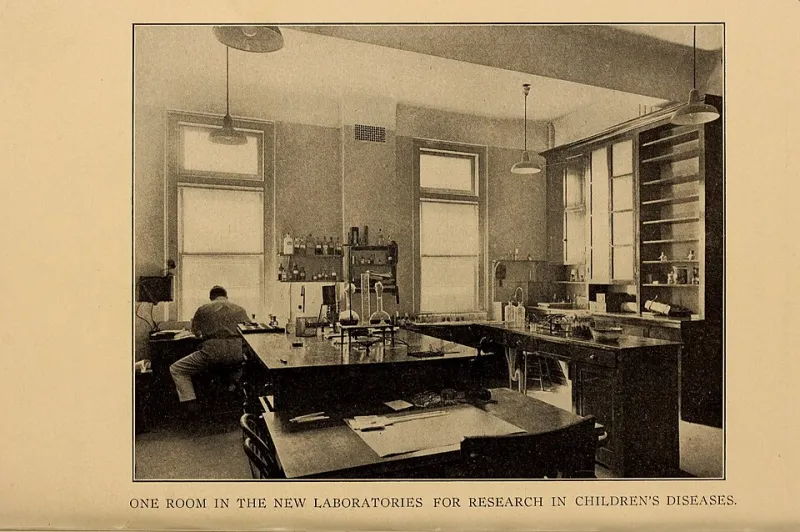
Photo: New York Nursery and Child's Hospital, No restrictions, via Wikimedia Commons
There is a particular kind of staff development that sounds excellent in a manager's head and dies on a Tuesday afternoon. It involves a thick handout, a coffee-stained flip chart and a promise to embed it in practice. By Friday, the handout is in the recycling and everyone is back to doing what they always did. I have seen it happen. I have probably been part of it.
This is not a criticism of training. It is a plea for something smaller, repeatable and real. In a small UK nursery, where the rota is tight and the paperwork is already generous, the best professional development might be nine minutes a week.
The nine-minute ritual
The idea is simple. Once a week, at the same time, staff pair up or gather in a small group. The ritual has three parts: one focused question, one quick observation and one shared next step. That is it. No portfolio. No action plan with a colour-coded cover.
Here is how the nine minutes might run. Minute one: choose the question. Minutes two to four: watch practice together, or think back to a moment from that morning. Minutes five to seven: talk about what you noticed. Minutes eight and nine: agree one small thing to try next week. Write it on a whiteboard, a phone note or the back of the snack rota. Not in a new folder.
Why one question beats ten objectives
Most nursery CPD fails because it is too broad. We try to improve communication, environment, transitions, outdoor play and parent partnerships all at once. Everyone nods. Nobody changes anything. One question narrows the beam. It makes the week feel doable.
Good questions are concrete and close to home. How do we know every child was listened to this morning? What happens when a child says no? Where is the quietest place in the room, and who uses it? Who has not spoken yet today? What do we do when snack goes wrong? These are not abstract standards. They are the stuff of Tuesday.
Keep it paperless, or nearly
If the ritual creates paperwork, it will not survive. A single shared note is enough. One sentence for the question, one for what we noticed, one for what we will try. That is a record you can actually look back on, and it takes less time than finding a pen.
Rotate who chooses the question. Sometimes it is the manager, sometimes the room leader, sometimes the apprentice. This matters. It signals that professional development is not something done to staff; it is something staff do together. It also surfaces the questions that matter on the floor, which are often different from the ones in the improvement plan.
Make it supportive, not surveillance
This is the bit that decides whether the habit sticks. The nine-minute ritual is not a performance review in disguise. It is not a chance to catch someone out. If staff feel watched, they will give you the answers they think you want, and the whole thing becomes theatre.
So set the tone early. The manager observes too. The language is we noticed, not you failed. No child is named in a negative way. If the question uncovers a real struggle, that is useful information, not a disciplinary matter. The next step should be small enough to try before the next Friday. We will put the books in a lower basket. We will wait three seconds before repeating a question. We will sit at the table during snack instead of hovering. Tiny, specific, kind.
A starter plan for this term
If you want to try it, keep the first month gentle. Week one: agree the time and the question at the Monday huddle. Week two: pair up across rooms so people see a different age group. Week three: share one next step at the end of the session, not in a written report. Week four: ask what felt useful and what felt like a chore. Then adjust.
Part-time staff can join by leaving a voice note or a line on the shared note. Staff who work alone in a room can use a two-minute video of their own environment, or simply walk the manager through it at the end of the day. The ritual should bend to the nursery, not the other way round.
The ripple effect
In 2026, recruitment and retention are still real pressures for small nurseries. People stay where they feel seen, where they can grow and where the work is not just a list of tasks. Nine minutes will not fix a broken rota or a tight budget. But it can build a habit of reflection that makes the week feel more thoughtful.
You are not doing this for an inspection. You are doing it because a team that talks about practice, in small and regular ways, tends to practise better. One question. One observation. One next step. Nine minutes. It is not much. That is exactly why it might work.