Before the Uniform Arrives: School Readiness Without the Checklist
Photo: MarkScottAustinTX, CC BY-SA 2.0, via Wikimedia Commons
Every November, the following September looks a long way off. Then someone mentions the uniform rail, a parent asks whether their child is ‘ready’, and the countdown quietly begins. By the time the spring term arrives, a normal developmental question has often turned into a deadline. That is a lot of pressure to put on a four-year-old — and on the adults around them.
School readiness is not a switch that flips on a set date. It is a relationship between a child, their family, their early years setting and the school they are moving to. The child who is ‘ready’ in one context may struggle in another. The child who cannot write their name may be brilliant at asking for help. The child who sits beautifully at group time may fall apart at lunchtime. None of that fits neatly on a checklist.
The trouble with a September deadline
September is an administrative date. It tells us when reception starts. It does not tell us when a particular child will be ready for its particular demands. Yet the language around readiness often turns that date into a test: can they do this yet, can they do that yet, will they cope?
That framing does two unhelpful things. First, it pushes adults towards measuring the things that are easy to see — name writing, counting, sitting still — rather than the things that actually help children settle. Second, it makes summer-born children look like they are behind when they are simply younger. A July birthday is not a deficit. It is an age difference, and it matters.
A better question is not ‘Are they ready for school?’ but ‘What will help this child make a good start, and who needs to know what?’ That question works in January. It works in June. It works on the first day of reception.
What readiness tends to look like in real life
The evidence and practice wisdom point in a similar direction: communication, emotional security and independence matter more than early academic drilling. Not because letters and numbers are unimportant, but because a child who can tell an adult what they need, tolerate small frustrations and ask for help is in a stronger position to access everything else.
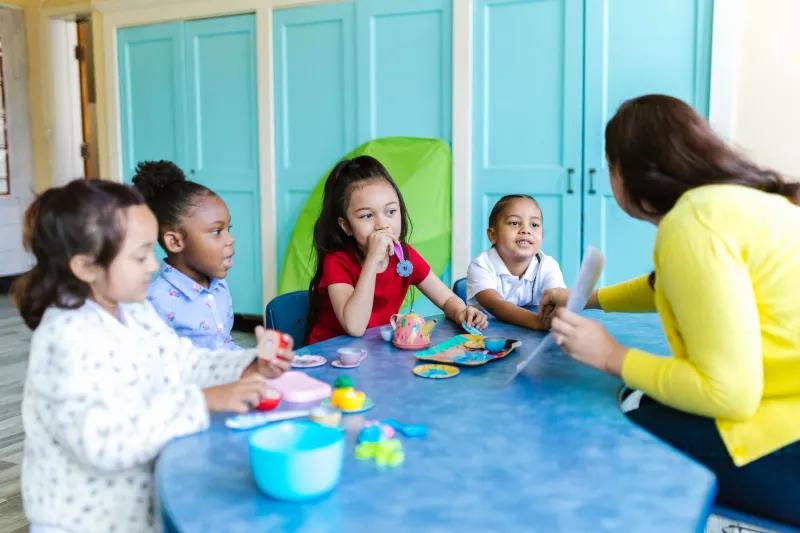
Communication might look like a child who can say ‘I need the toilet’ or ‘I don’t like that’ or ‘Can I play?’ It might look like a child who understands a two-step instruction, or who can use gestures, signs or a communication aid to make themselves understood. All of that counts.
Emotional security might look like a child who can be comforted, who can recover from a small upset with support, who knows that an adult is there. It is not about being unbothered by everything. It is about having a safe base.
Independence is often much smaller than we imagine. It is opening a lunchbox. Putting on wellies. Washing hands. Asking for help when a coat zip will not cooperate. These are the daily skills that make a reception classroom feel manageable.
Summer-born children need perspective, not pressure
In a reception class, the oldest child might be nearly a year older than the youngest. That is a huge gap in early childhood. It shows up in language, attention, physical coordination and confidence. It does not mean the younger child is failing. It means they are younger.
When we talk to parents of summer-born children, the most useful thing we can do is compare the child with themselves, not with the oldest child in the room. What can they do now that they could not do in the autumn? What support helped? What are they interested in? That is the information a reception teacher can actually use.
A spring-to-summer conversation framework
Rather than saving the school readiness chat for a single meeting in June, spread it across the spring and summer terms. Keep it conversational. Keep it short.
Spring: what is this child like now?
Ask parents what helps their child settle, what they love, what they find hard and what adults do that works. Share one or two observations from nursery. Avoid scores. Avoid the phrase ‘they’ll need to be able to…’ unless it is genuinely useful. The aim is a shared picture, not a verdict.
Early summer: what small independences can we practise?
Choose a couple of practical things that fit the child. Practising coat sleeves. Carrying a water bottle. Opening a snack box. Using the toilet with less help. Trying on shoes. These are worth more than flashcards. Ask parents what they would like to practise at home, and offer to mirror it at nursery.
Late summer: what should the reception teacher know?
With consent, pass on a short, strengths-based handover. What does the child enjoy? How do they ask for help? What helps them calm down? Are there sensory needs, language needs, medical needs or family context that would help the school get it right from day one? Keep it factual and kind.
What to record, and what to stop worrying about
A useful record is short. Note how the child asks for help, what they do when upset, their toileting and eating routines, their friendships, their interests, any sensory or language needs, and strategies that work. That is enough to give a reception teacher a running start.
What can we stop worrying about? Writing a full name before reception. Counting to twenty on demand. Sitting still for long stretches. Reading before they start. Being ‘ahead’. None of these are reliable signs that a child will settle well, and chasing them can crowd out the things that matter more.
The September question will keep coming around. But we do not have to answer it with a clipboard. We can answer it with a conversation, a bit of perspective and a plan that starts from the child in front of us.