The Language at the Snack Table: Home Languages in Ordinary Nursery Life
In plenty of UK nurseries, home-language support quietly becomes an event. There is a welcome song, a display board with flags, perhaps a special session in multicultural week. All of that can be well meant, but it can also leave a child's language sitting at the edge of nursery life rather than in the middle of it.
Children do not experience language as a topic. They experience it at snack time, when they ask for more; at the changing mat, when they need comfort; in the garden, when a puddle appears; at story time, when a familiar phrase lands. If we want every child to feel their whole self belongs in the room, home languages need to live in those ordinary moments. Not as a performance. Not as a test. Just as part of how the day sounds.
Start With the Routine, Not the Assembly
A dedicated language session is not the enemy. It is simply not enough on its own. The more useful question is: where does this child's language already fit into what we do anyway?
Snack is an obvious starting point. So is handwashing. So is the hello at the door, the song before lunch, the comfort word at rest time. You do not need a fluent speaker in every room to make those moments welcoming. You need curiosity, consistency and a proper partnership with families.
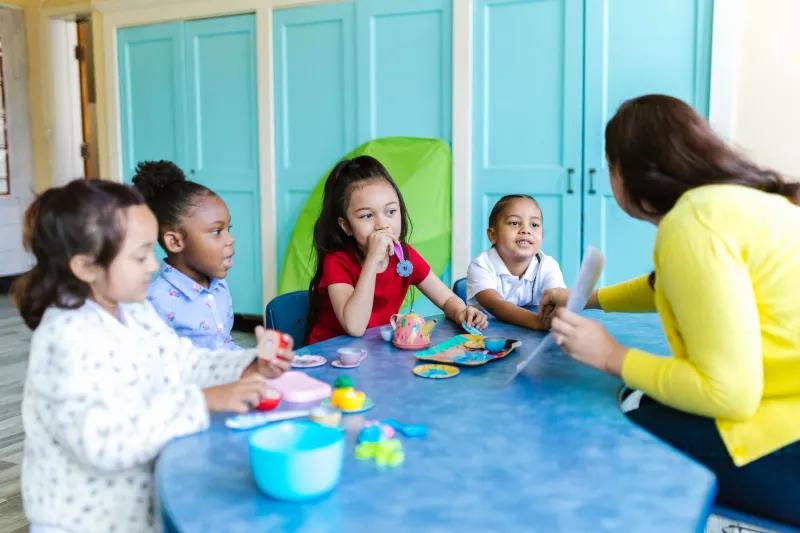
One nursery I heard about kept a small list by the snack table: the words children used at home for 'more', 'water', 'please' and 'finished'. Staff used them naturally, alongside English, without making a fuss. Nobody had to perform. The words simply became part of the table.
That is the difference between a gesture and a routine. A gesture happens once and is watched. A routine happens often and is lived.
Ask Families Properly
Families are not a resource to be mined for a display board. They are the experts on their child. So ask properly, and explain why you are asking.
Instead of a form that says 'What language do you speak at home?', try questions that get at real life. What do you say when your child is upset? What is snack called in your house? Is there a song or rhyme they love? What do you say at bedtime? Would you be comfortable recording a short voice note for us?
Give families options. Some will want to write things down. Some will prefer a quick chat at pick-up. Some will send a voice note. Some will say they are happy with English only, and that is their call. Respect it. Also avoid assuming one language per family. Many homes mix languages, switch between them, or use different languages with different relatives. A child may understand more than they say, and say more than adults expect.
Never use a child as the interpreter for their own family's needs. That is an adult job, and it matters for dignity as much as accuracy.
Build Staff Confidence, Not Fluency
A lot of practitioners hesitate because they worry about pronunciation. That worry is understandable, but it is not a reason to avoid the work. You are not auditioning for a language qualification. You are showing a child that their words are welcome here.
Choose a small number of phrases for your room: hello, goodbye, wash your hands, all done, help, more, sleep. Learn them together in a team meeting. Ask families to record them, with consent, so staff can listen and practise. Put them where adults will actually see them, not in a folder nobody opens.
It is fine to say, 'I am still learning that one.' It is fine to get it a bit wrong and try again. Children often enjoy correcting adults, as long as the adult is not making a joke of it. The message should be: your language is worth my effort.
Make Snack Time Language-Rich
Snack is one of the best places to begin because it is repetitive, social and full of real objects. There is naming, requesting, passing, counting, thanking and refusing. That is a rich language environment before you add anything else.
Use home-language words for foods and routines where you can. If a child says a word in their home language, respond to the meaning first. Do not demand a translation. You might repeat it naturally in English afterwards, or simply pass the water. Keep the pressure low. The aim is communication, not a vocabulary quiz.
Peer interest can be lovely here, too. Children often enjoy learning a friend's word for 'apple' or 'more'. Let that happen without turning the child into a teacher for the group.
Stories Without a Fluent Storyteller
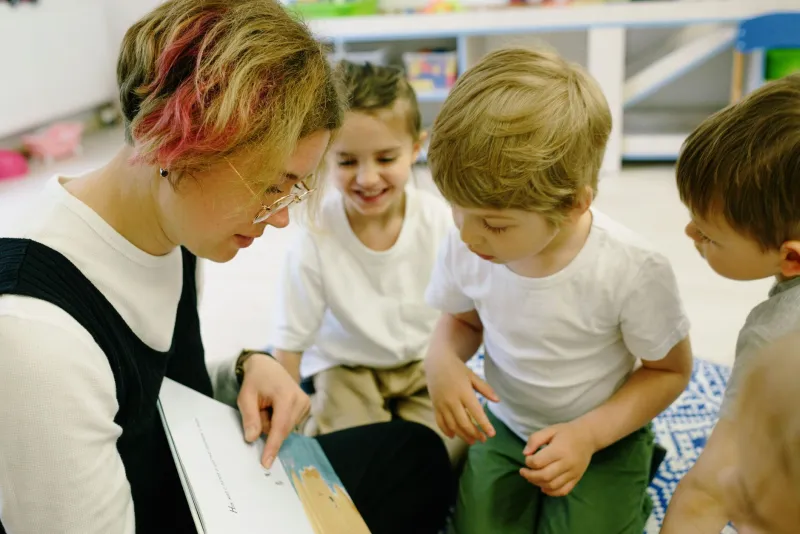
You do not need to read a whole dual-language text perfectly for it to count. Use wordless books and let children tell the story in whichever language they choose. Invite families to record a short story or rhyme. Keep those recordings in the usual story routine, not only on special occasions.
If a book has words in a child's home language, let the child lead where possible. Staff can say, 'I do not know this one yet. Can you help me?' That is different from making a child perform for visitors. The key is whether the child has a choice.
Care Moments Matter Most
Nappy changes, handwashing, resting and getting dressed are not separate from learning. They are loaded with language and feeling. A familiar comfort word at the changing mat can do more than a colourful poster on the wall.
Key people can learn a few phrases that matter in those moments: 'nearly done', 'well done', 'wash hands', 'lie down', 'I am here'. These are dignity words. They tell a child that the intimate parts of the day are still theirs.
Keep It Ordinary, and Check Yourself
Before you plan a home-language activity, run it through three simple tests. Would this happen if no one was watching? Is it part of a regular routine rather than a one-off? Does the child or family have some control over it?
If the answer is no, it may be tokenistic. A flag on a wall is not the same as a child hearing their word at snack. A language-of-the-month board is not the same as a family voice in the story corner. Both can be fine, but neither should be the whole plan.
A Small Plan for Next Week
Pick one routine, not the whole nursery. Snack is a good choice. Ask two families for three words or phrases, using whatever method suits them. Share those words at a brief team huddle. Use them for two weeks, naturally and without a big announcement. Then ask the families whether it felt right.
That is it. No launch event. No performance. Just a small, repeated change that makes the room more hospitable.
The goal is not perfect pronunciation. It is belonging. Children learn best when they feel settled, and they settle more easily when the sounds around them connect to home. Staff do not need to be multilingual to do this well. They need to be warm, consistent and willing to learn alongside the child.