Beyond the Changing Mat: Turning Everyday Care Into Real Learning
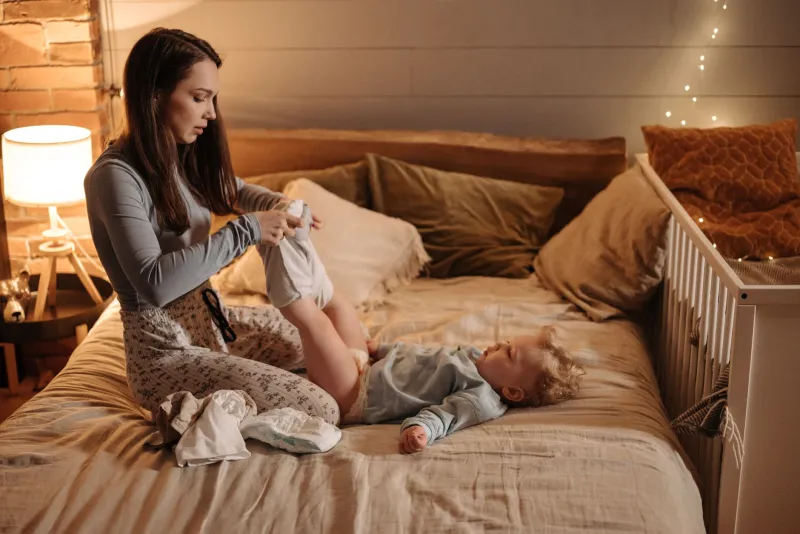
Ask a room leader what they have planned this week and they might mention the sensory tray, the story sack or the autumn walk. Ask them about nappy changes and you may get a sigh. That is understandable. In a busy UK nursery, care routines can feel like the bits between the learning. But the EYFS does not switch on when the activity tray comes out. It is there in the nappy change, the snack table and the handwashing queue.
In 2026, with ratios tight and paperwork familiar, it is worth asking a quieter question: what if we stopped treating care as a pause from the curriculum and started treating it as the curriculum? Not a separate curriculum bolted on top. The relational, everyday one that children actually live through.
The EYFS is already in the care routine
Look closely at a nappy change and you will see the prime areas doing real work. Communication and language: the back-and-forth, the naming of body parts, the 'shall we do your trousers first?' Physical development: balance, reaching, pulling up, cooperating with dressing. Personal, social and emotional development: trust, agency, the small thrill of choosing a nappy or washing hands by yourself.
Mealtimes are just as rich. Pouring, passing, waiting, saying please, noticing who has an empty cup. Handwashing brings sequencing, health routines and independence. None of this needs a laminated planning sheet to be valuable. But it does need adults who notice it.
The trap is thinking that 'curriculum' means adult-led activities. In practice, the EYFS is a framework for everything that happens in the setting, including the ordinary care that fills most of the day. The learning is not hiding. It is just not always written down.
Slow down the hands, not the clock
You cannot make a nappy change longer than it is. But you can make it more respectful. Prepare everything before you start so you are not rummaging for wipes with one hand. Tell the child what is happening. Offer a choice where you can: which nappy, which song, which hand first. Wait for their response, even if it takes a beat longer than you think you have.
This is not about adding a magic ingredient. It is about removing the rush. A care routine that feels calm tells a child: you are worth the time. That message is the foundation for everything else.
Observation prompts that fit real rooms
Most practitioners do not need another form. They need a way to hold on to what they noticed before the moment disappears. These prompts work on a post-it, a phone note or a quick comment in the team huddle:
- What did the child choose or refuse?
- How did they communicate that?
- What did they try to do by themselves?
- Who did they seek out, and how did they respond?
- What might they be ready for next?
One sentence is enough. 'Ava pulled her trousers up and said 'I did it' — then looked at me for a reaction' tells you more about her sense of self than a tick box ever will. Stick it in her learning journey or add it to the planning wall. The point is not to capture everything. It is to capture something that helps you respond.
Planning from care, not around it
Planning does not have to mean adding more. It can mean looking at what is already happening and asking what would help. If a child is fascinated by pouring at snack time, add a small jug and a wider cup. If handwashing has become a battle, try a visual sequence at the sink rather than a louder reminder. If a child is learning to take turns, build in a simple passing game at lunch.
Link it back to the characteristics of effective learning when you can. Are they exploring, trying, choosing, concentrating? Those are not separate from care. They are visible in it.
Making it work when you are short-staffed
This is the honest bit. In a small UK nursery, there is rarely a spare adult. Care routines happen while another colleague is managing the block area and someone else is on the door. So keep it small. Agree one care routine to focus on this half term. Maybe it is snack time. Maybe it is handwashing before lunch. Ask one practitioner to be the eyes and ears for two weeks and feed back in a five-minute team huddle.
Do not turn it into a paperwork project. Use the systems you already have. Add a line to your planning sheet: 'Care routine focus: snack — turn-taking, pouring, naming foods.' That is enough to keep it in mind.
The takeaway
Care is not a break from learning. It is where some of the most important learning happens. The child who is hurried through a nappy change learns something different from the child who is told what is happening and given a moment to cooperate. Both are curriculum moments. One is just easier to miss.
So the next time you write a plan, leave a space for the ordinary. The changing mat, the snack table and the sink are not distractions from your planning. They are your planning.