The Short Walk Next Door: A Calmer Way to Change Nursery Rooms
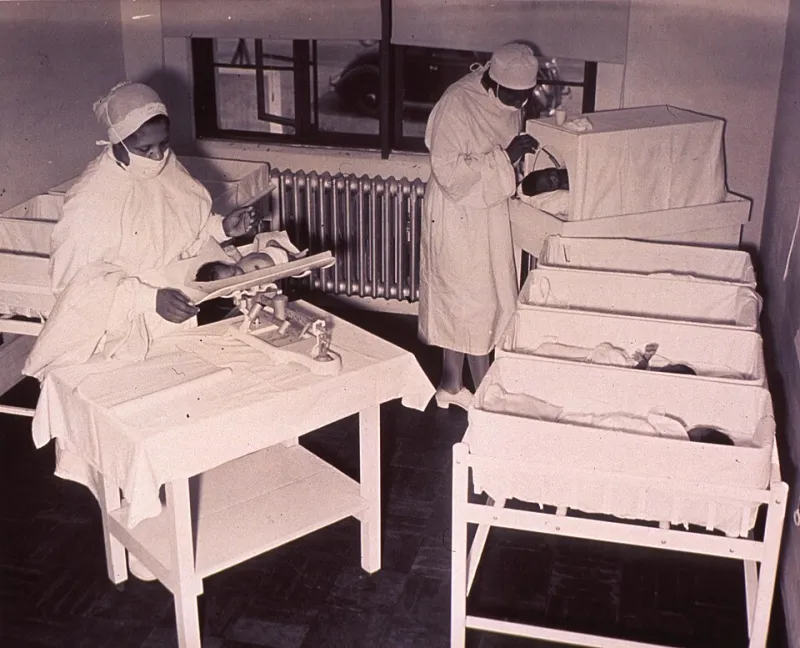
Photo: National Library of Medicine - History of Medicine, No restrictions, via Wikimedia Commons
Changing rooms inside a nursery can look like a small thing from the outside. A child walks a few metres down the corridor, gets a new peg, meets a slightly taller snack table. But for the child, it can feel like the ground shifts. They are not starting nursery from scratch — they already know the building, the smells, the way the garden gate clicks — so the job is not to build a new world. It is to help them carry their sense of belonging into the next one.
That distinction matters. A room move is not a second settling-in. It is a transition with history behind it. The child has a key person, favourite spots and a place in the room’s rhythm. A good plan works with that, not around it.
Begin with the room they’re leaving
Before anyone tours the preschool room, take stock of what the child already relies on. Who do they go to when they are wobbly? Where do they head after lunch? Is there a comforter, a song, a particular cup? Ask the current key person to jot down the ordinary things: the child who needs a minute by the window before group time, the one who likes to be told what is happening next, the one who will happily join in once they have watched from the edge.
This is not paperwork for its own sake. It is the thread you will hand to the new room. Without it, the move becomes a fresh start for the adults too, and the child ends up doing the work of explaining themselves all over again.
Visits that build a picture, not a test
Staged visits work best when they are short, predictable and repeated. One long morning can be overwhelming; three twenty-minute visits can feel like a story the child is getting to know. Start with a time of day that is calm and familiar — maybe story time or snack — rather than the busiest free-flow stretch. The new key person should be there, not hovering, just present and pleased to see them.
Then lengthen the visits. Let the child bring something from the old room: a book, a photo, a small bag. It gives them a reason to arrive and something to talk about. If they cling to the old key person for the first visit, that is information, not failure. The aim is familiarity, not a brave face.
The handover is human
A handover that lives only in a file is half a handover. The old and new key people need time together, ideally with the child nearby for part of it. The old key person can show, not tell: how the child signals they need space, how they like to be invited into play, what helps at nappy or toilet time. The new key person can visit the old room and see the child in their current element.
Keep the old key person visible at first. A wave across the corridor, a brief hello at the door, a shared joke about the wobbly tap — these small continuities tell the child that relationships do not end when rooms do. The new key person is not replacing anyone. They are joining the child’s circle.
A photo book with the wobbly bits left in
Photo books are a lovely idea, but they work best when they tell the truth. Include the new room’s ordinary corners: the snack table, the toilet door, the welly rack, the garden gate, the place where bags go. Add the faces of the adults and a few children, with names, so the child can practise saying them. Include a page for the old room too, because the child is not supposed to pretend it never mattered.
Avoid making it too glossy. A book full of beaming faces and perfect activities can set a strange expectation. The child needs to recognise the place on a normal Tuesday, not a show day. Let them add a sticker or a drawing. Keep it in their bag or on the book shelf so they can return to it without being quizzed.
Keep a few familiar rituals
You do not need to reinvent everything. If the old room sang a particular tidy-up song, sing it in the new room for a while. If the child always waves at the same window, make sure that window is still on the route. If they have a comfort object, agree where it lives in the new room before the first full session. These small rituals are not babyish. They are handrails.
The new room will have its own rhythm, and that is the point. But a few familiar threads make the new rhythm easier to join. Think of it as moving house with your favourite mug already unpacked.
Parents need the timetable too
Parents and carers should hear about the move before the child does, ideally in a short conversation rather than a surprise email. Explain why the move is happening, what the visits will look like, who the new key person is and how they can ask questions. Ask them what the child has been saying at home and what usually helps with change. Some children will talk about it a lot; others will seem uninterested until the week before.
Keep the communication simple and specific. A timeline with dates, a photo of the new key person and an invitation to pop in are more useful than a long policy. And if the child has a wobble, say so early. Parents can cope with honest updates; they struggle with finding out weeks later.
The first fortnight: keep the door ajar
The move is not finished on the first full day. For the first fortnight, the old key person might pop in at pick-up, or the new key person might send a brief note home about what went well. Watch for the child who is fine all day and falls apart at the gate, or the one who is quiet in a way that is not their usual quiet. These are not reasons to undo the move. They are reasons to adjust the pace.
Return visits to the old room can be part of the plan, not a sign of failure. A child might need to show a new friend where they used to sit. That is belonging doing its job — stretching, not snapping.
A room move is a short walk with a long shadow. Done with care, it teaches children something valuable: that change can happen without losing the people and places that made them feel safe. They do not have to start from scratch. Neither do we.