Pack-Away Without the Standoff: Turning Tidy-Up Into a Shared Nursery Job
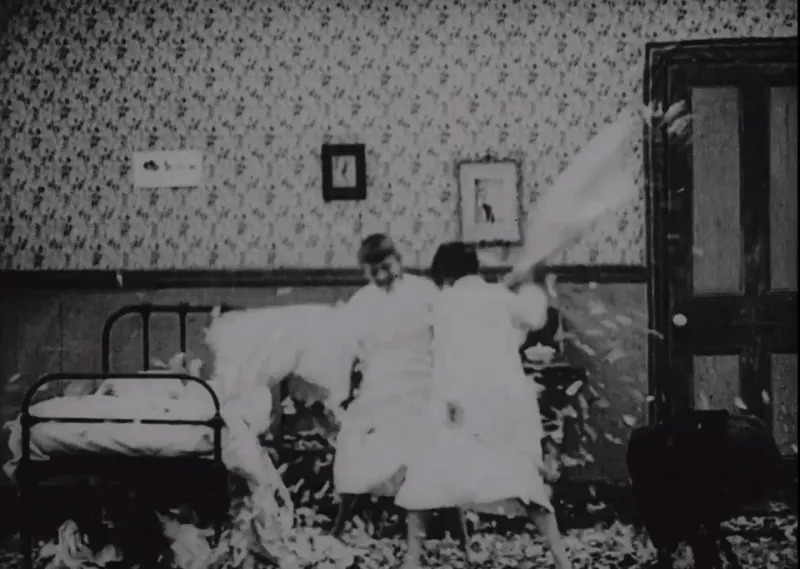
Photo: BFI Player, CC0, via Wikimedia Commons
You know the scene. It’s twenty past eleven, lunch is looming, and the room looks like a small tornado has passed through the home corner. An adult claps twice, announces “Tidy-up time!”, and the next few minutes become a brisk sweep of arms and reminders. Some children join in. Some carry on building. One child sits down in the middle of the chaos and refuses to move.
It’s understandable. Pack-away time sits right at the point of the day when everyone is a bit hungry, a bit tired and a bit less flexible. But when tidying becomes an adult-led sprint, we often pay for it later: in unsettled children, in lost language opportunities and in a room that feels abruptly closed rather than calmly reset.
The real cost of a rushed clear-up
A fast tidy-up can look efficient, but it often skips the bits that matter. Children lose the chance to finish a thought, to negotiate with a friend, or to make one last connection between the bricks and the story they were building. They also lose the chance to practise the quiet, useful skills that tidying offers: sorting, categorising, carrying, deciding, and putting things back where they belong.
And let’s be honest about the emotional bit. If every pack-away begins with an adult voice getting louder, children learn that clearing up is something done to them. That makes it harder next time. The five minutes we save can cost us twenty minutes of settling later.
Tidying is learning in disguise
In the EYFS, we talk a lot about independence and communication. Tidy-up is one of the most natural places to build both. A child who carries a basket of duplo to the shelf is using gross motor skills, spatial awareness and a bit of persistence. A child who asks, “Where does this go?” is practising language and problem-solving. A child who helps a friend put the dolls to bed is learning about shared responsibility.
So the aim isn’t a perfect room. It’s a room that gets reset with children, not around them. That shift in thinking changes the tone of the whole routine.
Swap the announcement for a visual cue
“Tidy-up time” is an abstract phrase. For a three-year-old who is deep in play, it can land as a sudden interruption. A visual cue gives them a moment to prepare. It might be a photo of the tidy room on the wall, a sand timer, or a simple picture card showing the next three steps: finish, tidy, wash hands.
In one setting I visited, the team used a laminated photo strip by the home corner. It showed a child putting a pan back on the shelf, then a child carrying a basket, then a child sitting on the carpet. No words needed. Children began checking it themselves. That’s the sort of quiet cue that does more work than a repeated instruction.
Give out jobs, not commands
“Help tidy up” is a big, vague request. “Put the red bricks in this basket” is doable. Better still, give the room a set of small roles: book wrangler, block sorter, light checker, cushion plumper, trolley pusher. These roles don’t need to be complicated or displayed on a fancy board. A simple job token or a named basket is enough.
Roles also spread the load. One child can be in charge of the paintbrushes while another closes the mark-making draw. A third can walk the room with a bin bag for scraps. When everyone has a small piece of the job, nobody has to be bossed through the whole thing.
Use one song, not five
Music is a brilliant cue, but only if it’s consistent. A single pack-away song — sung or played — becomes a signal that children recognise. It also gives the routine a shape: beginning, middle and end. Avoid switching songs every week or layering three different instructions over the top. One song, one clear finish, then a calm transition to the next part of the day.
If you use a timer, make it visible. A sand timer or a visual countdown on the tablet helps children see that the end is coming. It’s much easier to let go of a game when you can see the last few grains falling.
Don’t erase every trace of play
There’s a difference between a room that is safe and reset, and a room that has been stripped bare. Leaving one small invitation out — a book, a basket of animals, a few cushions — can help children move on without feeling that their play was simply wiped away. It also gives the next part of the day a softer landing.
This is especially useful in toddler rooms, where the urge to finish a game is strong and the ability to hold the plan in mind is still developing. A partial pack-away is often more realistic than a full one.
Narrate the reset
Language matters here. Instead of “Come on, hurry up”, try narrating what you’re doing: “I’m putting the cups back in the kitchen box. Then I’ll carry the box to the shelf.” This gives children a model, not a command. It also fills the room with useful vocabulary: basket, shelf, handle, heavy, full, empty, next to, behind.
For children with speech and language needs, this kind of running commentary is gold. It’s calm, repetitive and tied to real actions. No flashcards required.
Keep the routine short, predictable and kind
A good pack-away doesn’t need to be long. Ten minutes is plenty in most rooms: a two-minute warning, a visual cue, the song, shared jobs, then a final check together. Finish with something positive — a story, a song, or simply “We did that together.” The message children take away is that clearing up is part of nursery life, not a punishment.
And when it goes wobbly? It will. Some days the blocks stay out. Some days one child needs to sit with an adult while the rest of the room resets. That’s not failure. That’s real life with small people. The goal is a routine that bends without breaking, and a room where children learn that tidying is something we do with each other.