The Door That Closes Gently: Dignity in the Nursery Toilet Routine
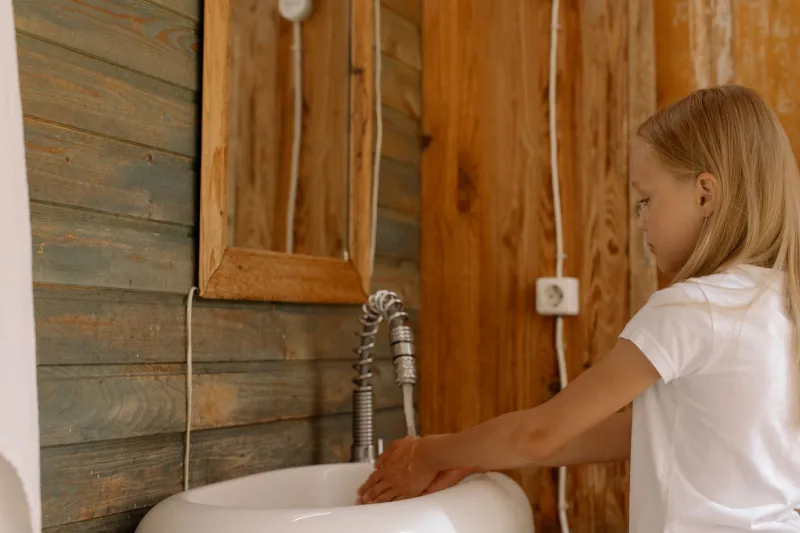
Toilet time is one of those parts of nursery life that can feel either invisible or enormous. When it runs smoothly, nobody notices. When it doesn’t, it can shape the whole mood of a room: a child standing anxiously by the door, a queue curling past the sand tray, an adult saying ‘come on, quick quick’ for the fourth time before lunch.
It is easy to understand why. Ratios are tight, rooms are busy, and there is always something waiting. But the toilet routine is not just a logistical job to be cleared. It is personal care. It is one of the first places where a young child learns whether their body is their own, whether asking for help is safe, and whether accidents are a disaster or just part of the day.
We do not need perfect bathrooms or endless extra staff to get this right. We need to look closely at the small messages our routines send.
Start with the room, not the rota
Before rewriting the timetable, look at the space. A child-height step, a low hook for spare clothes, a mirror, and a visual sequence on the wall can do a lot of quiet work. So can simple privacy: a door that closes gently, a curtain, a screen, or a cubicle that lets a child know this is their moment, not a public event.
If your toilet area opens straight into a busy room, think about sightlines. Can children choose a little privacy without an adult losing the ability to supervise? Can the handwashing area be separate from the queue? Are there enough low sinks and towels within reach? These are not luxury items. They are the practical furniture of independence.
It also helps to check clothing. Trousers with fiddly buttons, tight waistbands and belts can turn a straightforward trip into a struggle. Talk to parents gently about easy-fastening clothes, and keep a basket of spare leggings and pants in several sizes. A child who can manage their own clothing is a child who is more likely to try again next time.
The queue is the problem
A long line outside the toilet is rarely a sign of efficiency. It is usually a sign that we have turned a personal need into a group activity. Children who are not yet ready to go are made to wait. Children who are ready are rushed. And the adult at the front becomes a traffic officer rather than a supportive presence.
Instead, try a staggered approach. Some settings use a simple picture card or a named pebble that a child can take to the toilet area when they feel ready. Others invite two or three children at a time, with an adult nearby but not hovering. The aim is not to abandon supervision. It is to avoid the theatre of the mass toilet run.
It can help to link toileting to natural transitions rather than creating a separate command performance. Before outdoor play, after snack, before lunch: these are sensible moments to offer a reminder. But a reminder is not an order. ‘The toilet is open if you need it before we go outside’ sounds very different from ‘Everyone line up, we’re all going.’
And if a child says no? Unless there is a clear reason to encourage them, respect it. Forcing a child to sit when they do not need to go teaches them to ignore their own body signals. That is the opposite of what we are trying to build.
Language that leaves a child taller
The words adults use around toileting matter. They can make a child feel capable or clumsy, included or exposed. A few small swaps can change the atmosphere of the whole routine.
Instead of ‘Hurry up, we haven’t got all day’, try: ‘I’m going to wait by the sink. Call me when you’re ready.’
Instead of ‘Don’t be a baby’, try: ‘You’re still learning. I’m here to help.’
Instead of ‘Why didn’t you tell me?’, try: ‘Wet clothes happen. Let’s get you dry and comfortable.’
Instead of announcing a child’s accident across the room, try a quiet, close comment: ‘Let’s pop to your bag together and find your spare trousers.’
It is also worth asking before helping with clothing, especially with older children. ‘Would you like me to help with the button, or do you want to try again?’ gives a child a sense of control. If a child is hurt, distressed or not yet able to manage, help is still help. But it can be offered with consent and commentary, not a swoop from behind.
Accidents are information
Accidents are not defiance. They are development, illness, distraction, excitement, or simply a body that has not caught up with the plan. The way we respond in the first ten seconds is what children remember.
Keep spare clothes in a place the child knows. Let them choose what to wear if possible. Use a calm voice. Avoid making a child stand in wet clothes while an adult finishes a conversation. And avoid the phrase ‘You should have gone before’ — it is true, perhaps, but it is not useful.
For children who are consistently missing the signal, look for patterns rather than blame. Are they too absorbed in play? Are they worried about asking? Is the toilet area scary, noisy or hard to reach? Do they need a little more time after snack? A simple toileting diary, shared with parents, can reveal more than a hundred reminders.
What parents need to hear
Parents often feel vulnerable about toileting. They may have a child who is dry at home but not at nursery, or the other way around. They may be worried about a new baby, a move, or a recent illness. A brief, warm conversation at drop-off can prevent a lot of misunderstanding.
Try: ‘We’ve noticed Aisha is a bit hesitant about the toilet after lunch. At home, does she like to go on her own or with you nearby?’ That is partnership, not surveillance. It says we are paying attention, and we want to match what you do.
It also helps to be clear about spare clothes. A polite note on the parent board — ‘Please check your child’s bag for a full set of spare clothes, including pants and socks’ — is much kinder than a public handover about an accident. If a child runs out of clothes, find something clean and comfortable, and tell the parent quietly at pick-up.
When ratios bite
Let’s be honest: none of this is easy when one adult is supporting four children who all need the toilet at once. The pressure is real. So start small. Could the toilet routine be shared across two adults at key times? Could the queue be reduced by offering the toilet before the room gets busy? Could a visual sign tell children where to wait without an adult repeating it?
If a child needs more support than the room can give in that moment, say so in the handover book, not to the child. ‘Needs a quieter moment after lunch’ is useful information. ‘He’s being difficult’ is not.
Small changes, real dignity
Dignity is not a soft extra in early years. It is part of how children learn to trust adults, understand their bodies and ask for what they need. The toilet routine is one of the most ordinary places where that learning happens.
So close the door gently. Keep the queue short. Use words that leave a child feeling capable. And remember that a spare pair of pants and a calm voice will almost always teach more than a clipboard and a hurry-up.
If you change one thing this week, make it this: stop the mass toilet run. Let children go in small groups, with a familiar adult nearby and a little privacy around them. The room will still be busy. The routine will still need managing. But the message will be different — and that message is the one children carry with them.